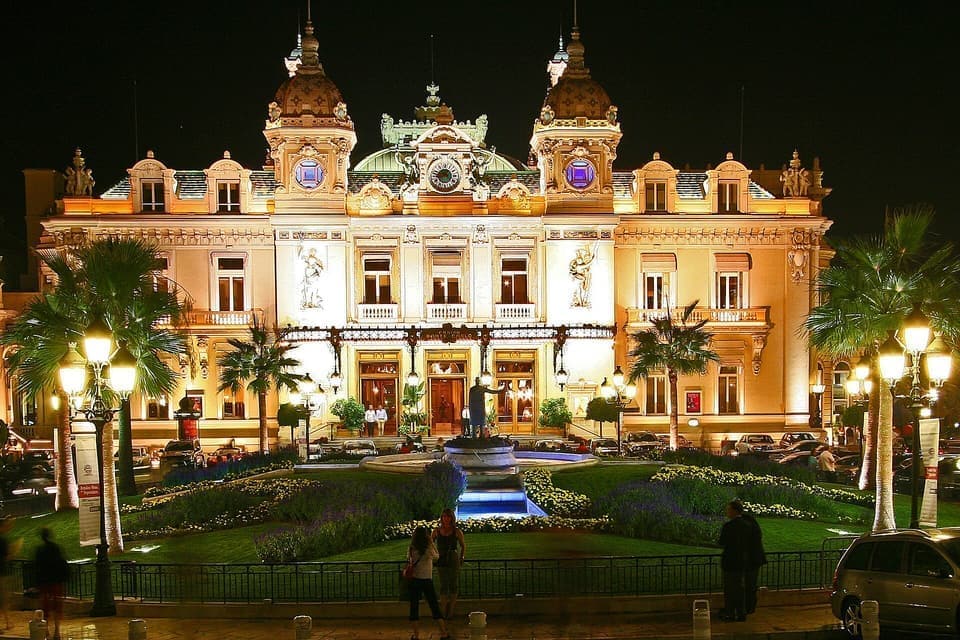
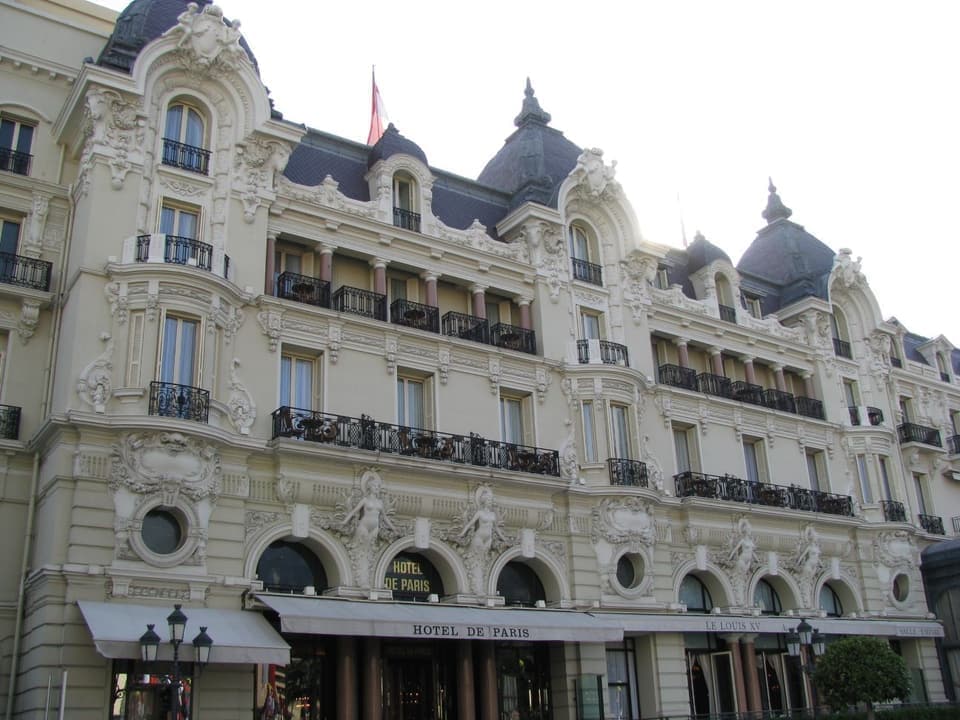
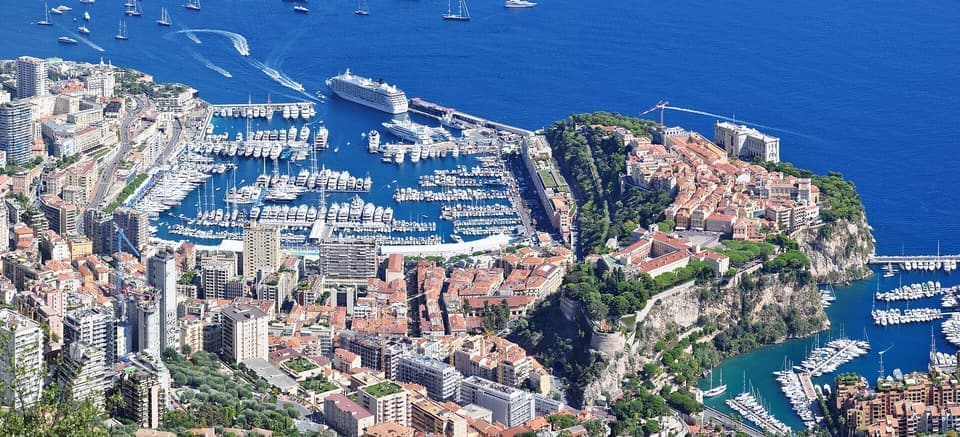
Monte-Carlo is not the old part of Monaco — it is the newest and most deliberate. In 1863 the Société des Bains de Mer was granted a gambling monopoly and set about building an entire resort quarter on what was then an empty headland called the Plateau des Spélugues. Charles Garnier, who designed the Paris Opera, built the Casino’s concert hall. The Hôtel de Paris opened the following year. The whole thing was named after the reigning prince, Charles III.
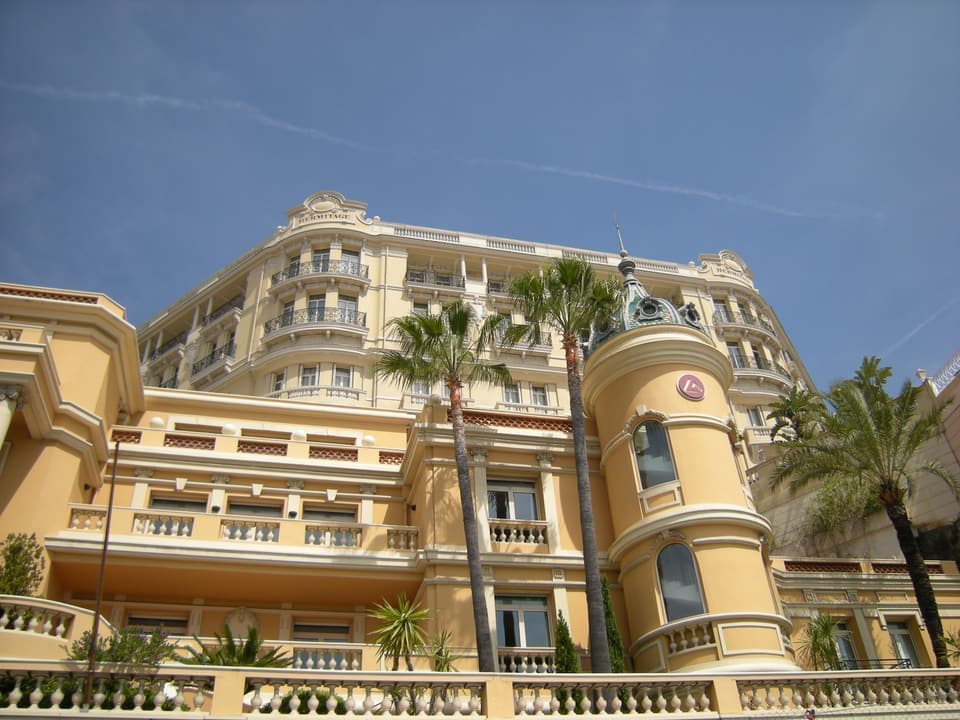
The result is the densest concentration of grandeur on the Mediterranean: the Casino, the Opéra, the Hôtel de Paris and the Hôtel Hermitage all within a two-minute walk of one square, with the terraced Jardins des Boulingrins dropping away below and the Café de Paris on the corner. It is genuinely beautiful at dusk, and genuinely crowded at midday.
Staying here costs the most and buys the most: you can have an aperitif at the Café de Paris, dinner at Le Louis XV, a look around the Casino’s Salle Blanche and a nightcap at the Hermitage’s bar without ever getting into a car. If that is the trip you came for, nowhere else in Monaco competes.
Best for
- The Casino and the Opera
- Michelin-starred dinners
- Walking home at 2am
Getting around from here
Monaco’s public lifts and escalators — around 80 of them — do most of the climbing
between quarters, and they are free. Bus lines 1, 2 and 6 connect the whole country for
a couple of euros, and nothing on this site is more than a twenty-minute walk from
anything else. Full detail in the
Monaco travel guide.