Skip to content
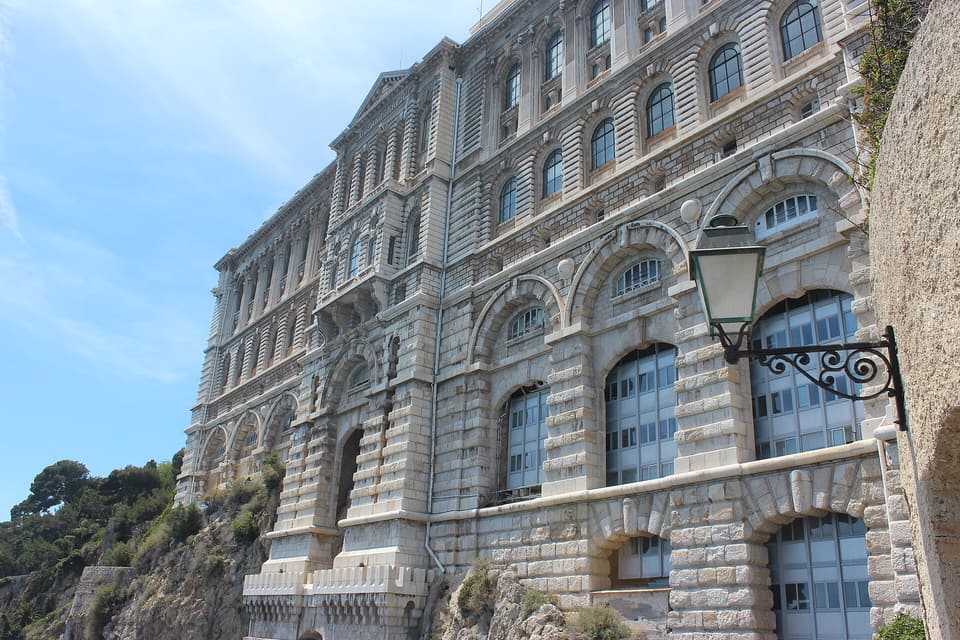
The Oceanographic Museum of Monaco rising from the cliff face above the sea
A prince, a cliff and Jacques Cousteau

Oceanographic Museum

Better than almost any aquarium, because it was never meant to be one. Prince Albert I built it into the cliff face in 1910 as a serious research institution, and Jacques Cousteau ran it for thirty years.

Albert I was a working oceanographer who happened to be a monarch — he led dozens of scientific expeditions, invented equipment, and published properly. The museum he opened in 1910 was the physical expression of that: a research institute with a public face, built into the side of the Rock so that its monumental facade rises straight out of the sea for 85 metres.

Jacques Cousteau was its director from 1957 to 1988, which is when it became internationally famous. Today the draw is the shark lagoon, the Mediterranean tanks and a genuinely good set of exhibits on the state of the sea — but also the building itself, and the rooftop terrace with views along the coast towards Italy.

It is the busiest paid attraction in the Principality and the single most-booked Monaco ticket on GetYourGuide, so a timed ticket is worth it in summer.

Practical details

Where Avenue Saint-Martin, on the Rock
How long Allow 2 hours, more with children
Tip Combine with the Palace and the cathedral — all three are a short walk apart

Getting there

Everything in Monaco is within a twenty-minute walk, but the country climbs from sea level to about 160 metres — use the network of roughly 80 free public lifts and escalators rather than the streets. Buses 1, 2 and 6 cover the whole Principality for a couple of euros. Full detail in the Monaco travel guide, and transfers from Nice airport in getting to Monaco.

Live availability

Tours including Oceanographic Museum

Powered by GetYourGuide
Nearby

Other Monaco sights

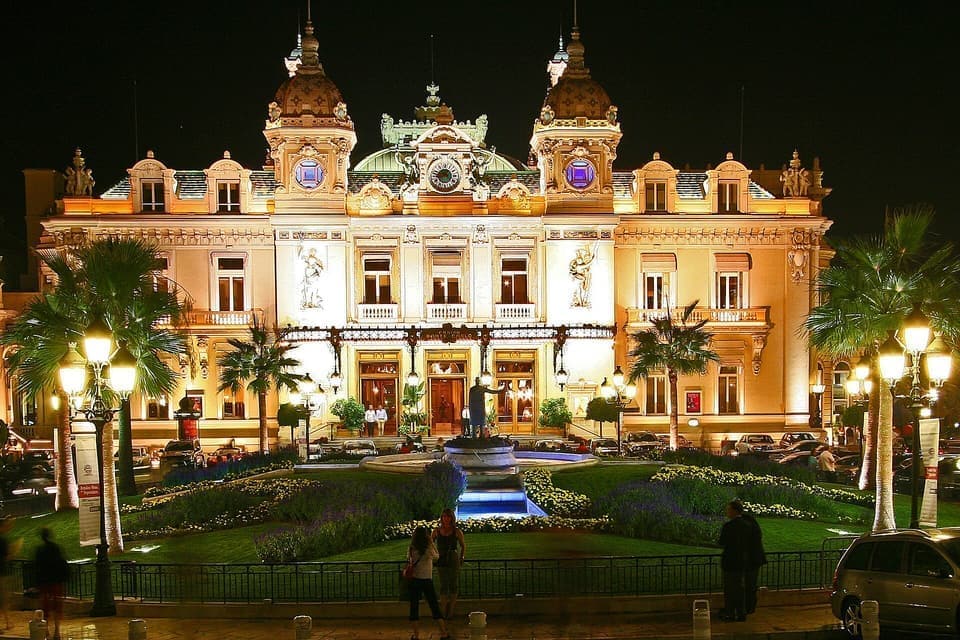
The floodlit Belle Époque facade of the Casino de Monte-Carlo at night Monte-Carlo

Casino de Monte-Carlo

The building that paid for a country

The most famous gaming room on earth, opened in 1863 to save the Grimaldis from bankruptcy — and successful enough that Monegasque citizens have paid no income tax since. Charles Garnier, architect of the Paris Opera, designed the concert hall attached to it.
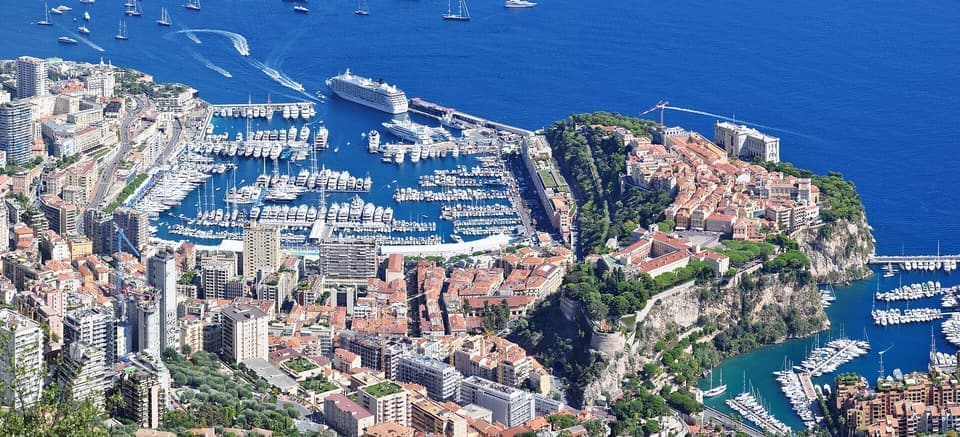
The Rock of Monaco with the Prince’s Palace above the sea Monaco-Ville

Prince’s Palace

Taken by a monk with a sword, 1297

A working royal residence on the site of a Genoese fortress. François Grimaldi took it in 1297 disguised as a Franciscan monk — which is why two sword-carrying monks still stand on the Monegasque coat of arms.

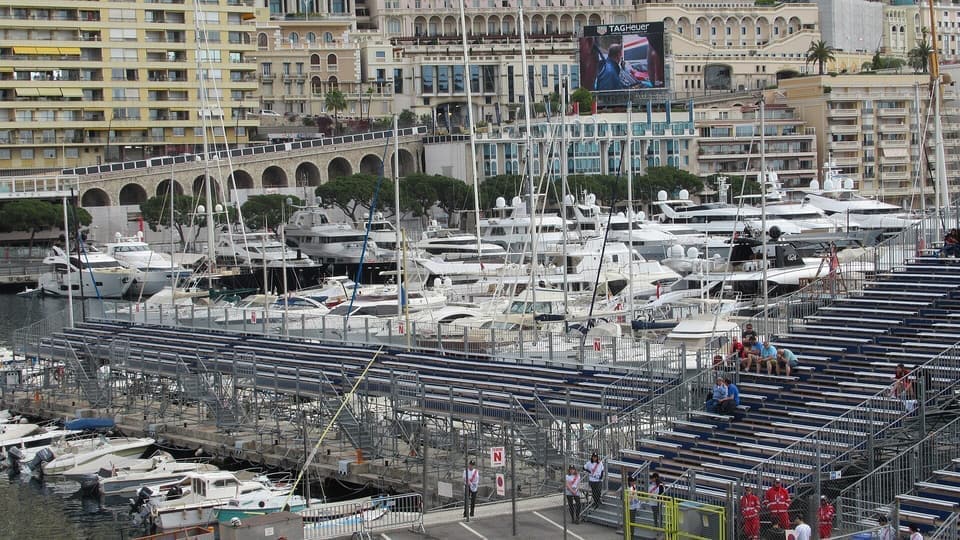
The Monaco Grand Prix circuit passing the swimming pool complex Experiences & events

Grand Prix Circuit

A racetrack for one week a year

Run on public roads since 1929 and barely changed since: 3.3 kilometres of ordinary streets barriered off each May, including the slowest corner in Formula 1 and a tunnel taken at 280 km/h.